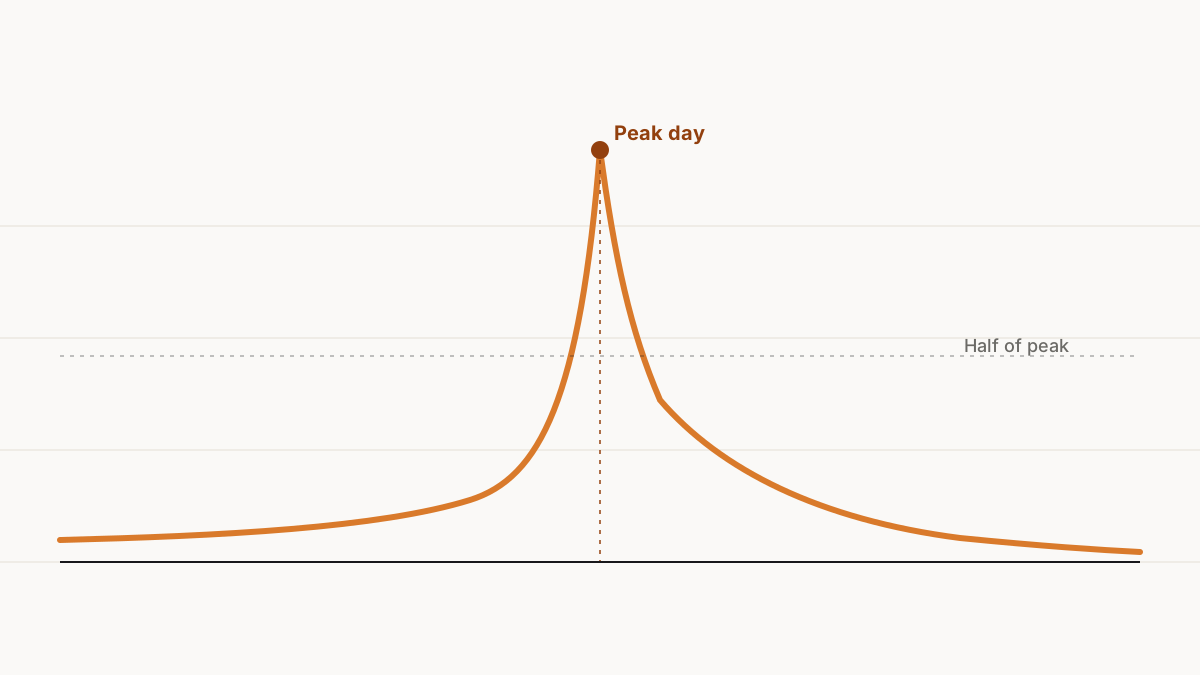
Everyone says outrage moves fast. Nobody clocks it.
Something takes over the internet for a day or two, then it's gone, replaced by whatever comes next. Anyone who spends time online has a rough sense of that rhythm. What's missing is a number: how many days, actually, before a controversy's audience falls to half of what it was on its worst day? We picked something measurable and measured it.
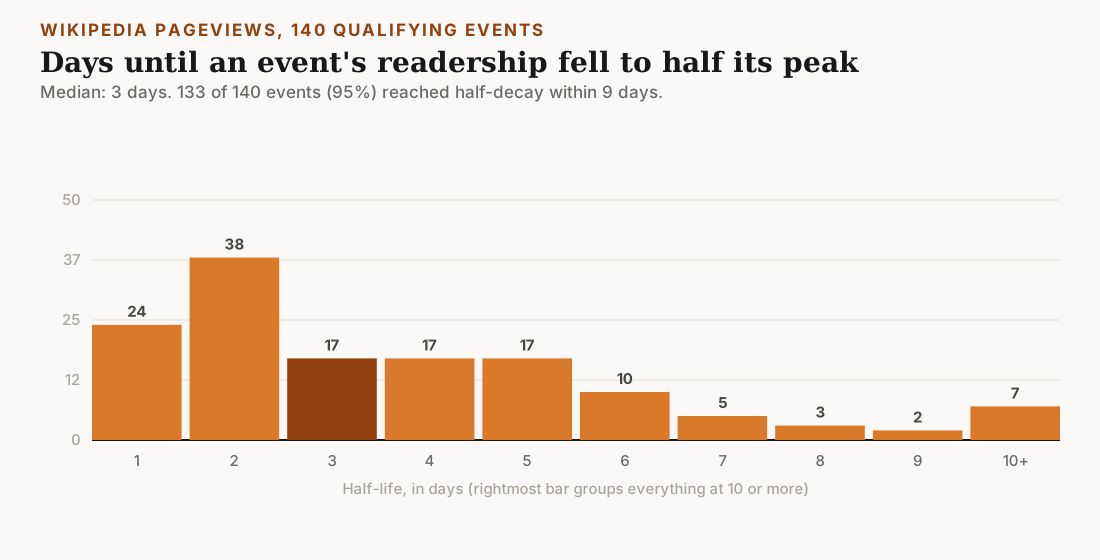
Across 140 real controversies with a clear, dateable spike in attention, the typical one lost half its peak readership within 3 days. Ten days after that it was down to a tenth. A year on, the median event was still pulling about 4% of its peak-day traffic, not zero, but a small fraction.
How we built the sample
We didn't start with 140 controversies we already knew about and check how fast they faded. We pulled every mainspace article in a fixed set of Wikipedia categories built around controversies and boycotts (Internet-related controversies and its 13 subcategories, plus Internet activism, advertising and marketing controversies, boycotts, and consumer boycotts), which came to 825 articles. We dropped 83 that were biographies, since a person's Wikipedia page keeps getting read for reasons that have nothing to do with any single controversy. That left 742 candidate articles.
For each one, we pulled the daily Wikipedia pageview history back to July 2015, as far back as the Wikimedia Pageviews API goes, using the "user" access type, which is Wikimedia's own filter for excluding bots and crawlers. Each series was smoothed with a trailing 7-day average to remove weekday noise, then checked for a genuine spike: a peak at least 10 times the pre-spike baseline (the median of the 60 days ending two weeks before the peak, with that two-week gap so the ramp-up itself doesn't inflate the baseline), with the peak itself at least 300 readers a day so a handful of stray visits doesn't get counted as an event.
Only articles with at least 90 days of data before the peak and 400 days after it made the cut, so half-life, days-to-10%, and one-year residual are things we actually measured, not numbers cut off by the edge of the data. Of 742 non-biography candidates (670 of which had usable pageview history), 140 cleared every bar. The other 530 either never spiked at all, spiked but hadn't decayed back down within the window we had data for, or didn't have enough history on one side of the peak to measure. That's the honest denominator: most articles filed under "controversy" on Wikipedia describe an ongoing pattern, not a single dateable event.
What decayed, and how fast
The shape is heavily front-loaded. 24 of the 140 events had already lost half their readers within a single day of the peak. 133 of the 140, 95%, got there within 9 days.
Fast, slow, and one that barely counts
Alt-right's Wikipedia page peaked at roughly 127,600 daily readers on November 19, 2016, right after the U.S. presidential election, took 9 days to fall to half that, and was down to about 2% of its peak a year later. WikiLeaks moved faster: it peaked at about 53,700 daily readers on April 17, 2019, the day Julian Assange was arrested in London, and had halved within 2 days.
123Movies is the extreme outlier at the other end. Its half-life was 39 days, more than ten times the median, and it took 617 days, over a year and a half, to fall to a tenth of its peak. That's a piracy site that kept getting blocked, kept relaunching under new domains, and kept generating fresh news pegs for years, so its Wikipedia readership never really got the chance to decay from a single event.
One entry needs a caveat rather than a headline. Buy Nothing Day looks like one of the fastest decays in the set, down to 10% of its peak within 2 days, but it isn't a one-off controversy. It's an annual protest that recurs every November, so a year after any given peak, interest hasn't been forgotten, it's just gone back to being off-season until the next one. We left it in the dataset because it met the same objective criteria as everything else, but it's the clearest example of why "half-life" here describes one spike's shape, not a claim about permanent public memory.
All 140 events
Sorted by peak date. "Days to 10%" is blank in a small number of rows that reached half-decay but hadn't reached a tenth of peak by the end of their measurable window. Every title links to the live Wikipedia article so you can check the source yourself.
| Event (links to its Wikipedia article) | Peak day | Peak daily readers | Half-life (days) | Days to 10% | Still visible after 1yr |
|---|---|---|---|---|---|
| Seedfeeder | 2015-09-29 | 28,640 | 2 | 2 | 15.2% |
| Ghost Security | 2015-11-22 | 2,304 | 4 | 22 | 2.3% |
| Hoover free flights promotion | 2015-11-23 | 3,285 | 2 | 2 | 2.0% |
| So You've Been Publicly Shamed | 2015-11-30 | 6,701 | 2 | 2 | 3.4% |
| The Next Day (song) | 2016-01-17 | 2,239 | 2 | 16 | 6.3% |
| Dark Justice (group) | 2016-03-30 | 429 | 1 | 15 | 4.2% |
| 2011 British privacy injunctions controversy | 2016-04-13 | 782 | 12 | 34 | 6.5% |
| Crash Override Network | 2016-09-15 | 1,243 | 5 | 19 | 3.1% |
| Anthony Weiner sexting scandals | 2016-11-03 | 28,596 | 4 | 17 | 1.2% |
| Buy Nothing Day | 2016-11-10 | 54,149 | 1 | 2 | 0.5% |
| Cuckservative | 2016-11-18 | 10,854 | 2 | 11 | 6.3% |
| Alt-right | 2016-11-19 | 127,630 | 9 | 26 | 2.4% |
| Shock advertising | 2017-01-14 | 10,964 | 1 | 1 | 0.6% |
| Non Expedit | 2017-02-06 | 1,978 | 4 | 26 | 12.6% |
| Spuds MacKenzie | 2017-02-08 | 12,963 | 5 | 6 | 3.7% |
| DeepDotWeb | 2017-03-03 | 2,721 | 2 | 3 | 8.2% |
| Putlocker | 2017-03-05 | 14,172 | 11 | 159 | 7.6% |
| R v Zundel | 2017-04-13 | 1,148 | 4 | 5 | 2.8% |
| Murder of Seth Rich | 2017-05-22 | 48,058 | 9 | 18 | 2.1% |
| The Janoskians | 2017-05-28 | 10,208 | 3 | 15 | 1.8% |
| Abstentionism | 2017-06-14 | 6,430 | 2 | 7 | 2.4% |
| Triple parentheses | 2017-08-07 | 6,435 | 2 | 47 | 15.2% |
| Hate group | 2017-08-19 | 2,009 | 5 | 94 | 11.2% |
| Paul Horner | 2017-10-02 | 4,008 | 3 | 9 | 1.2% |
| Pinkwashing (breast cancer) | 2017-10-10 | 647 | 6 | 19 | 17.4% |
| Alone Again, Natura-Diddily | 2017-10-31 | 62,815 | 1 | 1 | 0.2% |
| Wolfenstein II: The New Colossus | 2017-11-01 | 36,635 | 5 | 47 | 3.5% |
| Care2 | 2017-11-25 | 2,329 | 5 | 7 | 1.4% |
| Hipster racism | 2017-11-26 | 1,349 | 3 | 30 | 9.9% |
| My Stealthy Freedom | 2018-01-05 | 322 | 3 | 9 | 5.3% |
| Seriously McDonalds | 2018-02-17 | 508 | 3 | 11 | 6.7% |
| List of data breaches | 2018-04-11 | 8,696 | 2 | 8 | 7.6% |
| Backpage | 2018-04-13 | 30,159 | 5 | 157 | 6.3% |
| Channel Awesome | 2018-04-18 | 11,231 | 7 | 25 | 3.1% |
| YouTube copyright strike | 2018-05-25 | 1,228 | 5 | 20 | 8.8% |
| So where the bloody hell are you? | 2018-08-29 | 765 | 2 | 10 | 6.1% |
| Gandii Baat | 2019-01-14 | 14,962 | 13 | 139 | 47.4% |
| Facebook Beacon | 2019-01-26 | 706 | 2 | 52 | 15.6% |
| WikiLeaks | 2019-04-17 | 53,722 | 2 | 8 | 6.7% |
| McAlpine v Bercow | 2019-05-12 | 893 | 2 | 4 | 2.1% |
| 8chan | 2019-08-10 | 117,810 | 2 | 9 | 2.9% |
| Facebook privacy and copyright hoaxes | 2019-08-25 | 388 | 6 | 7 | 0.8% |
| Porn Wikileaks | 2019-09-05 | 6,087 | 4 | 15 | 7.7% |
| Indian Institute of Planning and Management | 2019-09-16 | 3,772 | 5 | 10 | 10.1% |
| 123Movies | 2019-10-01 | 68,077 | 39 | 617 | 26.2% |
| Close the Door campaign | 2019-10-06 | 305 | 4 | 4 | 0.5% |
| Goop (company) | 2020-01-31 | 6,633 | 8 | 124 | 9.4% |
| MonsterMind | 2020-03-28 | 401 | 2 | 9 | 3.4% |
| Cuck (film) | 2020-04-08 | 9,815 | 3 | 8 | 1.4% |
| The Epoch Times | 2020-04-16 | 49,103 | 6 | 83 | 6.4% |
| ID2020 | 2020-05-09 | 5,329 | 17 | 124 | 4.0% |
| GrabYourWallet | 2020-06-08 | 17,647 | 5 | 67 | 0.1% |
| 2017 Chicago torture incident | 2020-06-10 | 3,345 | 5 | 39 | 4.1% |
| Human flesh search engine | 2020-06-16 | 1,239 | 1 | 3 | 13.5% |
| Ding Jinhao engraving scandal | 2020-06-16 | 5,626 | 1 | 1 | 0.2% |
| Clearview AI | 2020-06-21 | 4,172 | 2 | 14 | 2.6% |
| St George (advertisement) | 2020-07-13 | 1,273 | 4 | 5 | 0.6% |
| Online shaming | 2020-07-13 | 16,301 | 6 | 54 | 1.2% |
| Comicsgate | 2020-07-30 | 3,736 | 5 | 19 | 5.2% |
| Dog poop girl | 2020-08-08 | 1,343 | 6 | 6 | 3.3% |
| Family Red Apple boycott | 2020-11-30 | 432 | 1 | 5 | 2.7% |
| Lsjbot | 2021-05-19 | 1,304 | 1 | 1 | 3.4% |
| Sweetie (internet avatar) | 2021-07-03 | 602 | 1 | 9 | 3.3% |
| Nipster | 2021-07-10 | 874 | 2 | 2 | 6.5% |
| WhatsApp snooping scandal | 2021-07-25 | 1,751 | 5 | 18 | 1.3% |
| High Guardian Spice | 2021-11-08 | 8,681 | 8 | 63 | 3.8% |
| User revolt | 2021-12-07 | 2,665 | 1 | 2 | 0.1% |
| Anonymous (hacker group) | 2022-03-03 | 78,087 | 3 | 12 | 2.9% |
| Pastel QAnon | 2022-04-14 | 1,506 | 1 | 1 | 3.1% |
| Xuzhou chained woman incident | 2022-05-28 | 2,275 | 3 | 5 | 5.0% |
| Italygate | 2022-06-29 | 668 | 2 | 12 | 3.5% |
| 2017 Macron e-mail leaks | 2022-09-05 | 1,260 | 1 | 1 | 1.0% |
| Pepsi Number Fever | 2022-09-08 | 4,222 | 7 | 170 | 10.7% |
| Monkey selfie copyright dispute | 2022-09-09 | 6,943 | 1 | 2 | 6.7% |
| Daisy (advertisement) | 2022-09-12 | 13,459 | 2 | 3 | 1.2% |
| Club Penguin Rewritten | 2022-10-11 | 845 | 1 | 2 | 20.7% |
| Texas Pete | 2022-10-14 | 1,216 | 4 | 22 | 6.7% |
| Myrotvorets | 2022-10-20 | 11,289 | 2 | 4 | 1.4% |
| Z-Library | 2022-11-10 | 60,094 | 4 | 108 | 7.8% |
| Charles Boycott | 2022-12-30 | 2,877 | 1 | 2 | 3.6% |
| George Mason University's historical hoaxes | 2023-01-12 | 388 | 1 | 8 | 3.7% |
| New Federal State of China | 2023-02-12 | 2,506 | 2 | 3 | 3.8% |
| Twitter, Inc. v. Taamneh | 2023-02-23 | 792 | 6 | 21 | 3.7% |
| Dumb Ways to Die | 2023-03-06 | 14,748 | 2 | 18 | 2.7% |
| Coors strike and boycott | 2023-04-10 | 1,135 | 4 | 20 | 13.4% |
| Cassandra case | 2023-04-22 | 3,345 | 3 | 5 | 0.5% |
| Dead Island: Riptide | 2023-04-26 | 3,868 | 6 | 31 | 7.0% |
| Sleeping Giants | 2023-05-09 | 18,704 | 1 | 2 | 0.1% |
| Character.ai | 2023-05-11 | 34,394 | 7 | 57 | 7.0% |
| Comprised of | 2023-05-11 | 852 | 2 | 13 | 7.2% |
| MenToo movement | 2023-06-15 | 398 | 7 | 55 | 5.3% |
| PJS v News Group Newspapers Ltd | 2023-07-01 | 429 | 1 | 7 | 8.4% |
| Facebook murder | 2023-07-14 | 948 | 3 | 13 | 1.4% |
| Zhemao hoaxes | 2023-08-15 | 1,107 | 2 | 3 | 6.9% |
| Atrocity propaganda | 2023-10-16 | 3,018 | 3 | 19 | 4.2% |
| NewsGuard | 2023-10-25 | 781 | 4 | 65 | 8.5% |
| CyberBunker | 2023-11-14 | 6,756 | 6 | 35 | 1.5% |
| You mean a woman can open it? | 2023-11-17 | 717 | 1 | 2 | 2.0% |
| Oink's Pink Palace | 2023-11-22 | 2,590 | 1 | 2 | 1.2% |
| Cog (advertisement) | 2024-01-01 | 651 | 1 | 2 | 6.0% |
| Rabbit (telecommunications) | 2024-01-17 | 328 | 6 | 25 | 4.0% |
| Disappearance of Peng Shuai | 2024-01-28 | 1,815 | 5 | 11 | 13.9% |
| He Gets Us | 2024-02-17 | 15,013 | 2 | 6 | 46.1% |
| Masal Bugduv | 2024-03-06 | 386 | 4 | 35 | 4.3% |
| Coming Home (advertisement) | 2024-03-08 | 6,162 | 2 | 2 | 2.4% |
| Dead Internet theory | 2024-04-09 | 50,102 | 3 | 29 | 7.0% |
| Shannen Rossmiller | 2024-05-13 | 931 | 4 | 28 | 1.1% |
| Scots Wikipedia | 2024-05-15 | 13,612 | 2 | 3 | 1.5% |
| Great Replacement conspiracy theory in the United States | 2024-07-21 | 1,299 | 2 | 18 | 8.1% |
| Dark Enlightenment | 2024-07-22 | 22,666 | 2 | 8 | 9.3% |
| Transvestigation | 2024-08-09 | 1,342 | 3 | 34 | 19.3% |
| Libertarian Party of New Hampshire | 2024-09-21 | 717 | 3 | 20 | 6.8% |
| SESAC | 2024-10-04 | 5,970 | 2 | 4 | 0.7% |
| Alan MacMasters hoax | 2024-10-27 | 8,542 | 5 | 20 | 2.5% |
| Fantastic Adventures scandal | 2024-11-10 | 2,269 | 2 | 30 | 5.0% |
| Shadilay | 2024-11-11 | 743 | 7 | 16 | 4.5% |
| 1977 Nestlé boycott | 2024-12-21 | 4,830 | 1 | 5 | 4.4% |
| Jokela school shooting | 2024-12-22 | 4,510 | 2 | 4 | 7.9% |
| Higashi-Ikebukuro runaway car crash | 2025-01-26 | 370 | 1 | 1 | 3.5% |
| Meta AI | 2025-02-01 | 10,567 | 6 | 26 | 6.6% |
| Puppy Monkey Baby | 2025-02-15 | 1,201 | 2 | 17 | 15.4% |
| 1902 kosher meat boycott | 2025-02-16 | 431 | 3 | 6 | 2.5% |
| Cottage cheese boycott | 2025-02-16 | 364 | 3 | 6 | 4.3% |
| India's Got Latent | 2025-02-16 | 11,920 | 4 | 17 | 1.9% |
| 1973 meat boycott | 2025-02-17 | 466 | 2 | 5 | 0.9% |
| Allegations of genocide in Donbas | 2025-03-06 | 1,744 | 4 | 25 | 6.4% |
| Protection from Online Falsehoods and Manipulation Act 2019 | 2025-03-19 | 429 | 2 | 16 | 4.3% |
| Facebook content management controversies | 2025-03-23 | 546 | 3 | 10 | 4.5% |
| Manosphere | 2025-03-26 | 22,444 | 13 | 152 | 32.9% |
| Saudi infiltration of Twitter | 2025-03-28 | 353 | 1 | 2 | 3.2% |
| MAGA Communism | 2025-04-11 | 623 | 12 | — | 20.4% |
| 4chan | 2025-04-21 | 52,996 | 8 | 29 | 6.0% |
| Soyjak.party | 2025-04-21 | 7,128 | 5 | 10 | 1.6% |
| Pivot to video | 2025-04-29 | 791 | 2 | 9 | 3.4% |
| Killing of Robert Godwin | 2025-05-06 | 3,985 | 2 | 9 | 4.2% |
| Eurovision Song Contest 2025 | 2025-05-19 | 302,419 | 5 | 10 | 9.0% |
| Femcel | 2025-05-21 | 1,011 | 4 | 7 | 2.3% |
| Israel in the Eurovision Song Contest 2025 | 2025-05-21 | 9,275 | 4 | 9 | 20.3% |
| White genocide conspiracy theory | 2025-05-27 | 25,490 | 2 | 11 | 3.7% |
| 2018 Karbi Anglong lynching | 2025-06-12 | 948 | 5 | 20 | 3.8% |
What this doesn't measure
Wikipedia pageviews are a proxy for people looking something up, not a direct measure of how much anger or discussion something generated on social media. Someone who saw a controversy on X or TikTok and went to check the background on Wikipedia is doing something different from someone who just posted about it, and a lot of outrage never touches Wikipedia at all. This dataset only captures controversies big enough, and encyclopedic enough, to drive a measurable spike in encyclopedia readership.
The data starts in July 2015, the earliest date the Wikimedia Pageviews API provides at daily granularity, so nothing before that is in the sample. Nothing from roughly the last 13 months could qualify either: an event needs 400 days of runway after its peak to get a one-year residual number, which pushes the most recent eligible peak back to around mid-2025.
"Half-life" implies smooth exponential decay, and most of these curves are reasonably close to that, but not all of them. A handful have a second smaller bump, a court date, an anniversary, a follow-up story, that this method doesn't distinguish from noise. The number reported is simply the first day the smoothed series crosses 50% of the peak, not a fitted decay constant.
Use this data
The full dataset is free to reuse. If you cite the headline numbers or any individual event, please link back.
Cite this
Hollowvane Editorial, “The Half-Life of Online Outrage: A Data Study of 140 Controversies,” Hollowvane, published August 3, 2026, https://hollowvane.com/half-life-of-online-outrage/.