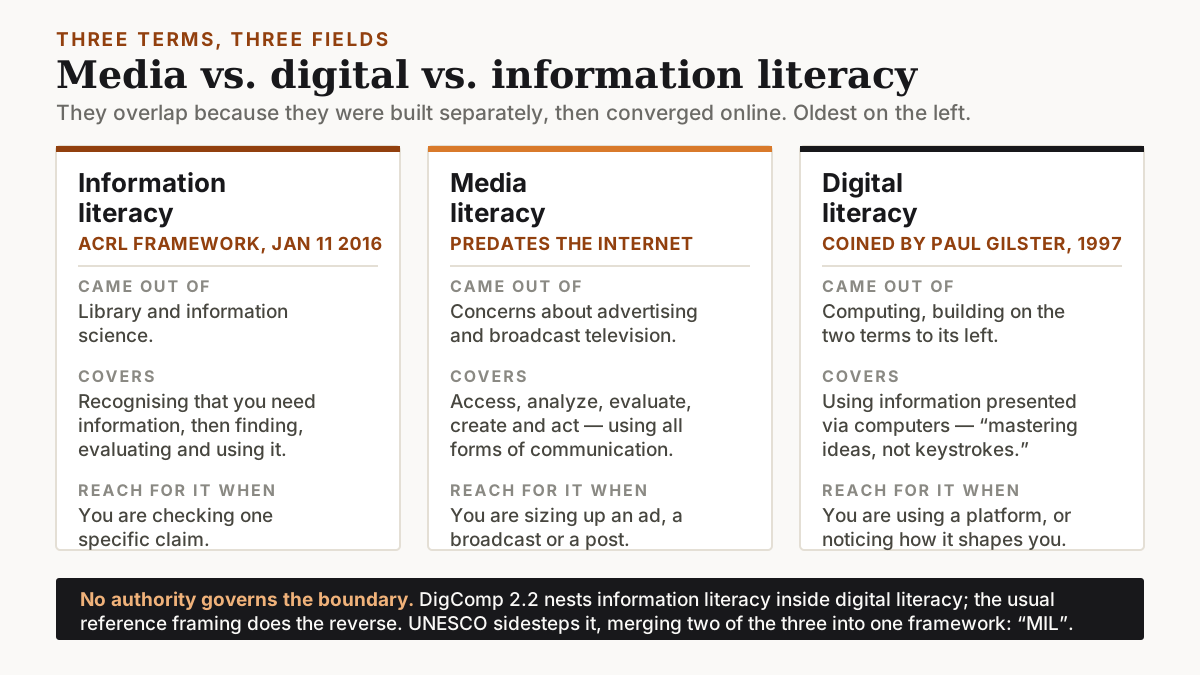
Information literacy: formalized in 2016, rooted in library science
Information literacy predates the internet and comes out of library and information science. It is the ability to recognize that you need information for a specific problem, then locate, evaluate, and use it, whether the problem is academic, medical, civic, or practical. It is not about media formats specifically; it is about the process of finding and using information at all.
The field's current reference point is the ACRL Framework for Information Literacy for Higher Education, adopted by the Association of College and Research Libraries on January 11, 2016, replacing an older set of discrete skill-based standards. The Framework deliberately avoids a checklist of skills in favor of six "threshold concepts", ideas like understanding that authority is constructed and contextual, or that searching works best as strategic exploration, not a single query, concepts meant to apply across formats and disciplines, not just one specific research task.
Media literacy: broader than digital, older than the internet
Media literacy covers the ability to access, evaluate, and produce media in any form, television, radio, print, and digital platforms alike. It predates the internet too: the field grew out of concerns about advertising and broadcast television long before social media existed, which is part of why the Five Key Questions framework is written to apply to any message, not just online ones. A fuller definition, including where the field's most-cited working definition comes from, is covered in What Is Media Literacy?
UNESCO takes this further institutionally, treating media literacy and information literacy as close enough to merit a single combined framework, Media and Information Literacy (MIL), rather than two competing fields. That choice is itself evidence for how blurry the boundary actually is at the level of international policy, not just casual usage. For anyone translating any of this into an actual classroom, not a policy debate, a directory of free curricula and games, every link checked rather than copied from an old roundup, is a more practical starting point than picking a side in the framework argument.
Digital literacy: coined in 1997, and it keeps swallowing the others back
"Digital literacy" is the newest of the three terms by decades. Paul Gilster coined it in his 1997 book Digital Literacy, defining it as the ability to understand and use information in multiple formats from a wide variety of sources when it is presented via computers, and summarizing the idea as "mastering ideas, not keystrokes." The term built directly on decades of prior work in visual, technological, computer, and information literacy, not something wholly new.
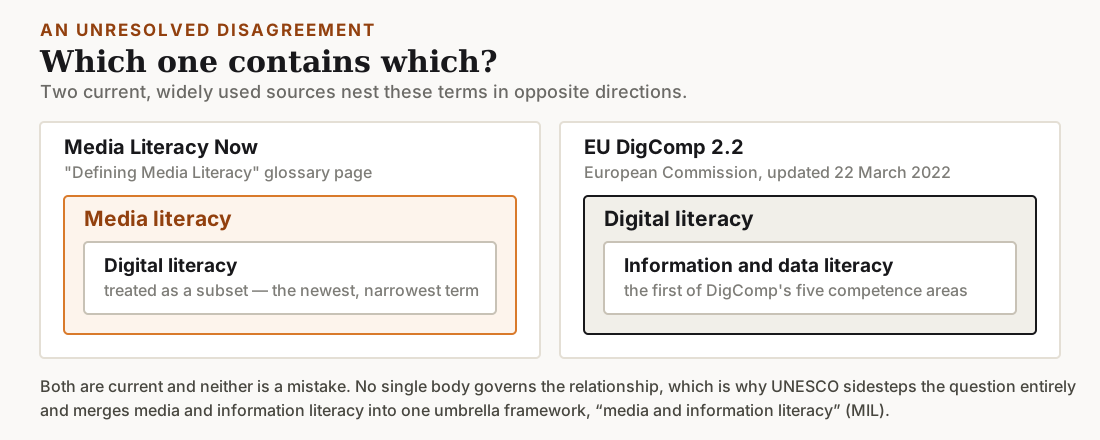
That inheritance shows up in how official frameworks define digital literacy today. The European Commission's DigComp 2.2, updated March 22, 2022 and used across EU member states to set digital-skills policy, organizes 21 digital competences into five areas, and the very first area is literally named "information and data literacy." In other words, one of the continent's most widely used digital literacy frameworks builds information literacy into digital literacy as a subcomponent, rather than treating them as separate skill sets. Other current definitions describe the relationship the other way around: Media Literacy Now defines digital literacy as "applying media literacy skills when using digital technology to create, send, and take in information and messages," nesting digital literacy inside media literacy instead. That contradiction between a major EU policy framework and this framing is a real, unresolved inconsistency in the field, not a settled hierarchy.
Librarians have been arguing about the boundary for years
This isn't a boundary confusion unique to casual usage. ACRLog, the blog of the Association of College and Research Libraries, ran a piece explicitly titled "Versus / and / or: The relationship between information literacy and digital literacy" examining whether the two fields should be taught together, kept separate, or merged, without landing on a single answer. When the professional body that wrote the 2016 Framework is still publicly debating how its own term relates to the neighboring one, that is a reasonable signal that the terms genuinely resist a clean, permanent taxonomy, not that casual speakers are simply getting it wrong.
Why the overlap is real, not a mistake
These fields grew up separately, in library science, media education, and computer science departments respectively, then converged as more information and media moved online. That is why definitions from different sources describe genuinely overlapping skills using different names, and why even major frameworks like DigComp and the general media-literacy-subset framing disagree on which term contains which. Using the terms interchangeably in conversation is not always wrong; the more useful question is usually just what the term is for. Talking about evaluating a news broadcast calls for media literacy. Talking about researching a specific claim calls for information literacy. Talking about using a platform's tools, or, increasingly, spotting how a platform's own incentives shape what gets shown to you, the subject of Why Platforms Reward Rage Bait, calls for digital literacy specifically.
A note on scope
This overview draws on the ACRL Framework's own January 2016 adoption record, Gilster's original 1997 definition from Digital Literacy, UNESCO's published MIL framework, and the European Commission's DigComp 2.2 documentation, rather than on a single textbook's framing. Where frameworks genuinely disagree, DigComp folding information literacy into digital literacy versus Media Literacy Now's framing of digital literacy as an application of media literacy, this piece lays out the disagreement without picking a winner, since no single authority currently governs how these three terms relate. The same kind of disagreement shows up one level over, in how many categories media sorts into: count by format and you get three or four, count by who paid for it and who controls the channel and you get a different three or four, because the two questions were never measuring the same thing.