

The short version
Stockholm syndrome is the popular name for a hostage developing positive feelings toward their captor. It is not a recognized psychiatric diagnosis, has no agreed-upon criteria, and by the FBI's own data is something most hostages never show any sign of.
The gap between the popular idea and the clinical record is unusually well documented, because the case the term is named after involved a hostage who spent the rest of her life on record disputing what happened to her.
The 1973 robbery that produced the name
On August 23, 1973, Jan-Erik Olsson attempted to rob Kreditbanken on Norrmalmstorg square in Stockholm and took four bank employees hostage, later joined in the vault by his acquaintance Clark Olofsson. The standoff lasted six days, ending August 28 without any hostage deaths. It was the first crime in Sweden covered live on television, which is part of why the aftermath became a public phenomenon rather than a private one.
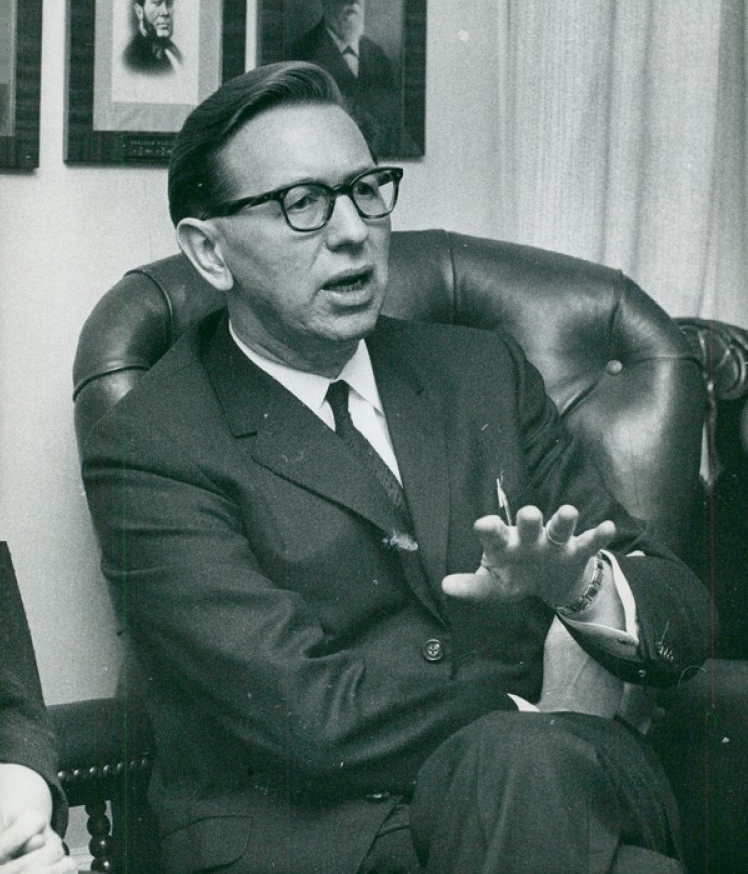
Nils Bejerot, a criminologist and psychiatrist who was part of the police response team during the standoff, coined the term shortly afterward, first as "Norrmalmstorgssyndromet," after the square, later shortened internationally to Stockholm syndrome. Bejerot was analyzing the hostages' behavior from the position of the authorities they had grown suspicious of, not as a clinician who had sat down with them afterward to hear their account.

What the hostage the term is named after actually says
Kristin Enmark, one of the four hostages, has spent decades disputing the label attached to her own experience. In a 2023 interview reported by Euronews, she described the framing of what happened to her this way: "It was as if they decided in advance how things were. But I wasn't in love. I was a 23-year-old woman who survived six terrifying days in a bank vault." She wrote in her own memoir that there was "no love or physical attraction" on her side, and that Olofsson protected her from Olsson, which is part of why she cooperated with him.
Enmark's account has consistently centered on a different criticism entirely: that the police response, not the robbers, posed the greater danger. She had criticized officers to reporters at the time for negotiating recklessly with her life on the line, and that friction with law enforcement is itself one of the three conditions the FBI's own framework lists as necessary for the syndrome to develop, discussed below. In her telling, cooperating with a captor while afraid of a chaotic police response wasn't a psychological syndrome. It was the more survivable option in a situation she didn't choose.
Christoffer Rahm, a psychiatrist at Sweden's Karolinska Institute, told Euronews the condition is simply "not a psychiatric diagnosis," describing the hostages' responses instead as an ordinary defense mechanism for coping with trauma. Gender studies professor Cecilia Åse, in the same reporting, called Stockholm syndrome a "constructed concept," one that gave a name to why authorities and the state had failed to protect the hostages in the first place, rather than describing something wrong with the hostages' minds.
How rare it actually is, by the FBI's own numbers
The most direct data comes from the FBI itself. In a July 2007 FBI Law Enforcement Bulletin article, "Understanding Stockholm Syndrome," four crisis-negotiation specialists (Nathalie de Fabrique, Stephen Romano, Gregory Vecchi, and Vincent Van Hasselt) reported on the FBI's Hostage Barricade Database System, which at that point held data on more than 4,700 federal, state, and local hostage and barricade incidents. Their finding: 73% of captives showed no evidence of Stockholm syndrome at all.
The same article lays out three characteristics the authors tie to its development: hostages have positive feelings for their captors, hostages show fear, distrust, or anger toward the authorities trying to rescue them, and (less commonly discussed) the captors develop positive feelings toward the hostages in return. The authors note these three do not always show up together in a given case, though law enforcement is trained to encourage the first two in hopes of inducing the third, since that's the one that keeps hostages alive. One of the piece's co-authors, a retired FBI agent with over 30 years in law enforcement, wrote that he "rarely witnessed behavior indicative of the development of Stockholm syndrome" across his career, and offered a specific reason: the large majority of US hostage and barricade situations are domestic in nature, involving people who already know each other, while the syndrome as described requires strangers.
The article also directly addresses a case where the label got misapplied in the media: Elizabeth Smart, abducted at 14 in 2002, was publicly speculated to have developed Stockholm syndrome when she was found alive nine months later, visibly reluctant to be identified. The FBI authors reject the comparison outright, writing that "compassion alone does not define the condition, and this situation did not feature all elements necessary for development to truly occur." A hostage or captive expressing conflicted emotions toward a captor is not, on its own, evidence of the syndrome. It fails the same three-part test the popular retellings tend to skip.
Why it isn't a recognized clinical diagnosis
Stockholm syndrome has never appeared in the DSM (the American Psychiatric Association's diagnostic manual) or the ICD (the World Health Organization's), which is a different and more specific claim than "disputed." It means no committee of clinicians has ever agreed on a set of symptoms that would let a clinician diagnose it the way they'd diagnose PTSD or major depression.
A 2008 systematic review by Namnyak and colleagues, published in Acta Psychiatrica Scandinavica, searched PubMed, EMBASE, PsycINFO, and CINAHL for everything written on the topic and found 12 papers meeting their inclusion criteria. Their conclusion was blunt: the existing literature is mostly case reports, the term is used ambiguously across those reports, and no validated diagnostic criteria have ever been described. What gets called Stockholm syndrome in casual conversation more often overlaps with two conditions that do have diagnostic standing: trauma bonding and PTSD.
Why the label keeps spreading anyway
None of this research history has slowed the term down. "Corporate Stockholm syndrome" now circulates as shorthand for employees who defend a bad boss or a toxic workplace, and the phrase gets applied loosely to romantic relationships, cults, and fandoms with no hostage-taking involved at all. That drift matters for a specific reason: once a term detaches from the conditions that supposedly define it, it stops being a diagnosis and starts being a rhetorical move, a way to imply someone else's loyalty is a symptom rather than a judgment they made for reasons of their own, which is close to the exact criticism Enmark has spent fifty years making about her own case.
This is a recognizable pattern for anyone who's spent time on this site: a media-shaped version of an event outcompetes the boring, better-documented one, and the correction never catches up to the reach of the original story. Kitty Genovese's case followed the identical arc, a dramatic 1964 newspaper account of 38 indifferent witnesses that trial transcripts didn't support, taught as fact in psychology textbooks for over 40 years anyway. In both cases, the person who could have corrected the record firsthand was available and on record. The correction just wasn't as good a story.
Bejerot's title did a lot of unstated work here too. "Psychiatrist analyzes hostage behavior" reads as clinical authority, ethos in the classical sense, even though he built the diagnosis without the one conversation that would normally ground it: talking to the person being diagnosed. That's worth remembering the next time a psychological label shows up in a headline with a confident, one-word name attached. The name is doing more persuasive work than the evidence usually is.