
The short version
Ethos, pathos, and logos are Aristotle's three ways to persuade someone: through the speaker's credibility, through the audience's emotions, or through the argument's own logic. Every persuasive message, honest or not, is built from some combination of the three.
The useful insight for spotting manipulation isn't memorizing the Greek terms. It's noticing that content built to manipulate almost never skips this structure and invents something new. It fakes ethos with borrowed or invented authority, fakes pathos by engineering a feeling before you've seen the evidence, and fakes logos by presenting something that looks like data or logic but doesn't actually support the specific claim being made.
Where the terms come from
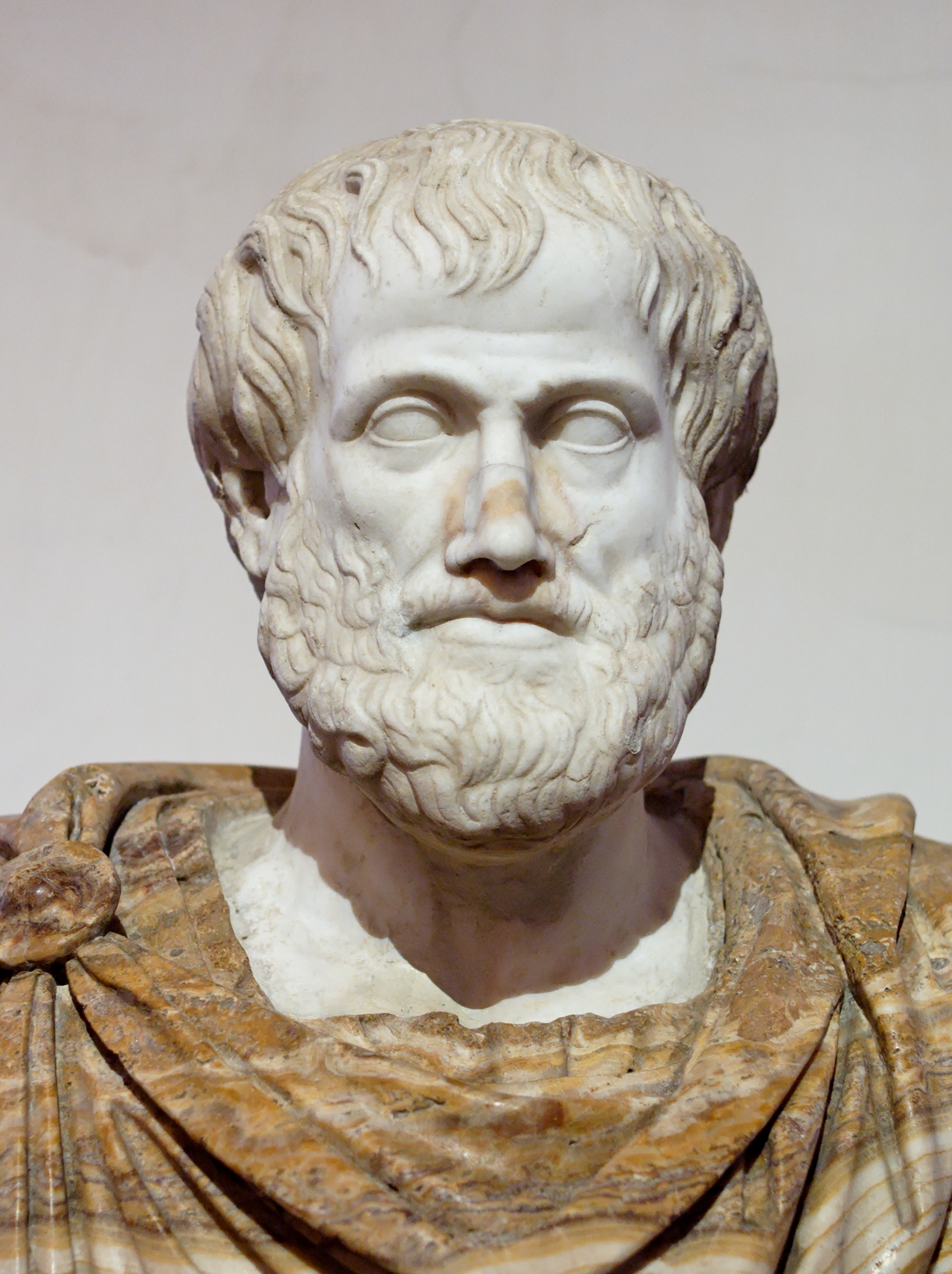
The three appeals come from Aristotle's Rhetoric, written in the 4th century BCE. Per the Stanford Encyclopedia of Philosophy's entry on the text, Aristotle held that persuasion comes about through the character (ethos) of the speaker, the emotional state (pathos) the speech puts the audience in, or the argument (logos) itself, and that a speaker who is trusted is believed more readily on most subjects, and entirely on subjects with no objective way to settle them.
On one common reading, Aristotle treats logos as the primary mode of persuasion, with ethos and pathos as secondary. Elsewhere in the same work, though, he describes a speaker's character as close to the most effective means of persuasion available, so the hierarchy is less settled than textbook summaries often suggest. Either way, he didn't treat pathos as illegitimate. Chapters II.2 through II.11 of the Rhetoric work through specific emotions (anger, fear, shame, pity) in detail, on the premise that a speaker who understands what an audience is feeling can address an argument to that state honestly. The framework doesn't rule out emotion. It just asks whether the emotion fits the facts or replaces them.
The terms have stayed in circulation for over two thousand years mostly through composition and rhetoric classes, which is also why most of what ranks for "ethos pathos logos" today is writing-class material: how to build a persuasive essay, not how to catch one built to deceive you. That's a legitimate use of the framework. It's also not the only one.
Ethos: credibility that's supposed to be earned
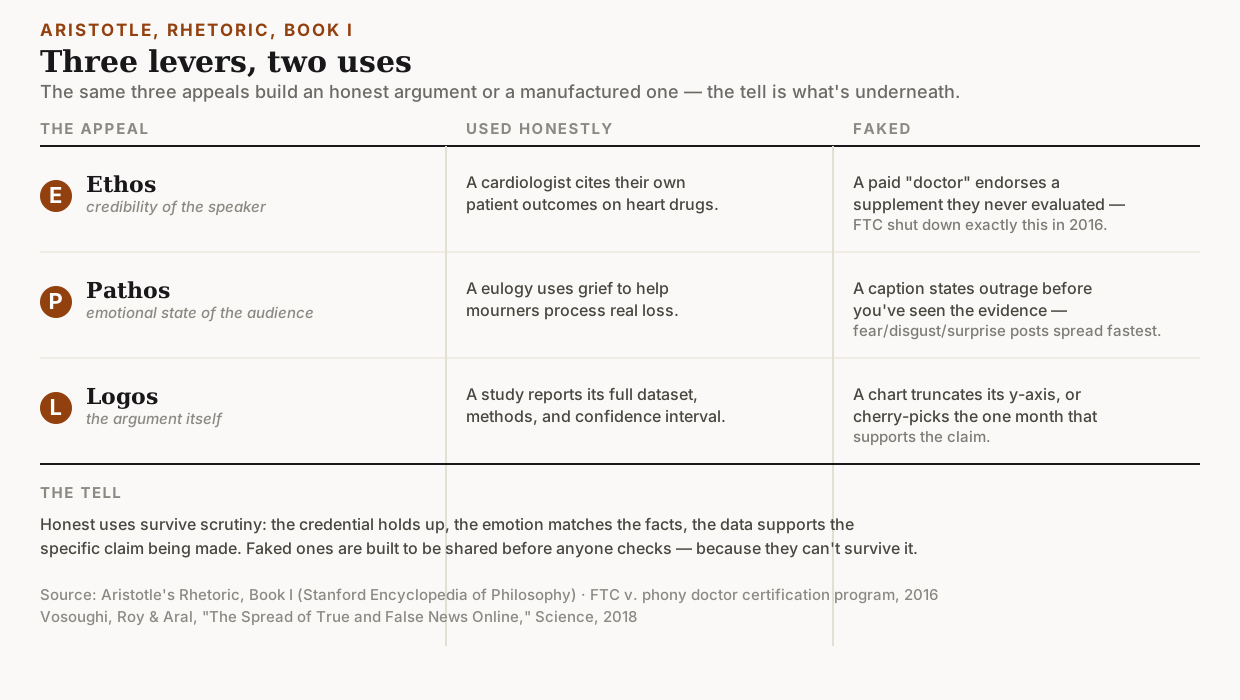
Ethos works because expertise is a real, useful shortcut. Nobody has time to independently verify every medical claim, so a genuine cardiologist citing their own patient outcomes is doing something legitimate: compressing years of training and direct evidence into a claim you can reasonably trust without redoing the research yourself.
Counterfeit ethos borrows that shortcut without the work behind it. The clearest documented example: in June 2016, the FTC settled charges against SmartClick Media LLC, doing business as "Doctor Trusted," and its owner Robert Vozdecky, over a certification seal sold to roughly 800 websites claiming products were "carefully evaluated by an independent medical doctor." The FTC's complaint found the two freelance doctors involved never actually assessed the products or verified the advertising claims attached to the seal. Affiliated lifestyle blogs posed as independent reviewers while functioning as paid advertising vehicles. The judgment came to $603,588, and the FTC's own language called the seals "meaningless."
That case is useful precisely because it wasn't subtle once someone checked. The seal looked like ethos. The credential behind it didn't hold up to the one question that matters: did this person actually do the evaluation their title implies?
Pathos: emotion that's supposed to fit the facts
Pathos works because emotion is information. Feeling angry about real harm, or moved by a real loss, is not a failure of reasoning; it's a normal response to content that actually warrants it.
Weaponized pathos engineers the feeling ahead of the evidence, and it has a documented advantage in exactly the environment where most people encounter persuasive content now. Vosoughi, Roy, and Aral's 2018 study in Science analyzed roughly 126,000 rumor cascades on Twitter and found false news reached more people, faster, than true news in every category studied. Their explanation pointed to novelty and emotional reaction, specifically fear, disgust, and surprise, as stronger predictors of resharing than accuracy. False claims are structurally easier to make surprising, because they aren't constrained by what actually happened.
That mechanism is the same one behind rage bait: content engineered to provoke anger because anger is a reliable engagement signal, independent of whether the underlying claim holds up. Why platforms reward rage bait goes into the incentive structure in more detail. The tell isn't that a post makes you feel something. It's whether the feeling was earned by what actually happened, or manufactured by how it was framed.
Logos: an argument that's supposed to hold up
Logos works because logic and evidence are genuinely persuasive when they're sound: a study that reports its full dataset, its methods, and its confidence interval gives you something you can actually check.
Logic-shaped logos looks like data or reasoning without doing the work data or reasoning is supposed to do. One of the most studied versions is the truncated bar-chart axis. Correll, Bertini, and Franconeri's peer-reviewed study on the technique found that truncation's effect on how viewers perceive the size of a difference persists across chart designs, and that showing viewers an explicit warning about the truncation reduced the effect but didn't eliminate it. A chart that starts its y-axis at 90 instead of 0 can turn a 2-point difference into something that looks, visually, like a tenfold jump, while every individual number on the chart stays technically accurate.
Cherry-picking works the same way with a wider net: a real, accurate statistic (crime dropped 50% this year) that omits the base rate that would make it unremarkable (from 4 incidents to 2). Nothing on the page is false. The selection of which true thing to show is where the manipulation happens, which is exactly why it's harder to fact-check than an outright lie.
Same three levers, two uses
Laid out side by side, the honest and faked versions of each appeal use the same structure and the same vocabulary. The difference is whether the thing underneath the appeal would survive someone actually checking it.
Why the most effective manipulation stacks all three
A post that only fakes one appeal is comparatively easy to catch: an anonymous account with no credibility making an emotional claim with no evidence reads as suspicious on its face. The posts that spread furthest tend to stack all three at once. A borrowed credential (a screenshot of a badge, a "doctor" byline) supplies fake ethos. A caption stating the conclusion before the evidence supplies engineered pathos. A chart or statistic, technically accurate but selectively framed, supplies logic-shaped logos. Each fake appeal makes the other two harder to question, because together they look like exactly what a trustworthy argument is supposed to look like.
That's also why "does this feel true" is a weak test on its own. A post engineered to pass all three checks simultaneously is specifically built to feel true. The Five Key Questions of media literacy frame this as asking who made the message and why, which does more work than assessing the feeling it produces.
The same honest-tool-or-dodge duality shows up outside these three levers, too. Allegory is a narrative technique with the same split personality: the exact structure that lets a story persuade honestly is what lets a communicator retreat to "it's just a story" when the underlying claim gets challenged.
Three checks that work on all three appeals
For ethos: does the credential being cited actually match the claim being made, and can you verify it independently of the post itself? A real cardiologist talking about diet trends outside their specialty is still borrowing credibility from the wrong place.
For pathos: would you feel the same way about this if it were presented flatly, without the framing? If the caption is doing more work than the underlying fact, that's worth noticing before sharing, not after.
For logos: does the specific number or chart support the specific claim in the headline, or just something adjacent to it? Checking the axis, the base rate, and the time window catches most logic-shaped arguments without needing any specialized statistics background.