
What actually happened to Kitty Genovese
Most people carry one sentence about Kitty Genovese: 38 neighbors watched her being murdered and nobody picked up a phone. That sentence comes from a single newspaper article published two weeks after her death, and almost every checkable part of it has failed under examination.
The reason to go back to it now has little to do with true crime. This is one of the best documented cases of a factual claim that survived four decades of professional scrutiny because it was useful. It is also a case where the repair is still visibly in progress, and where the repair has started generating errors of its own. Both halves are worth watching, because the machinery driving them is not specific to 1964.
The 1964 New York Times article that made the story
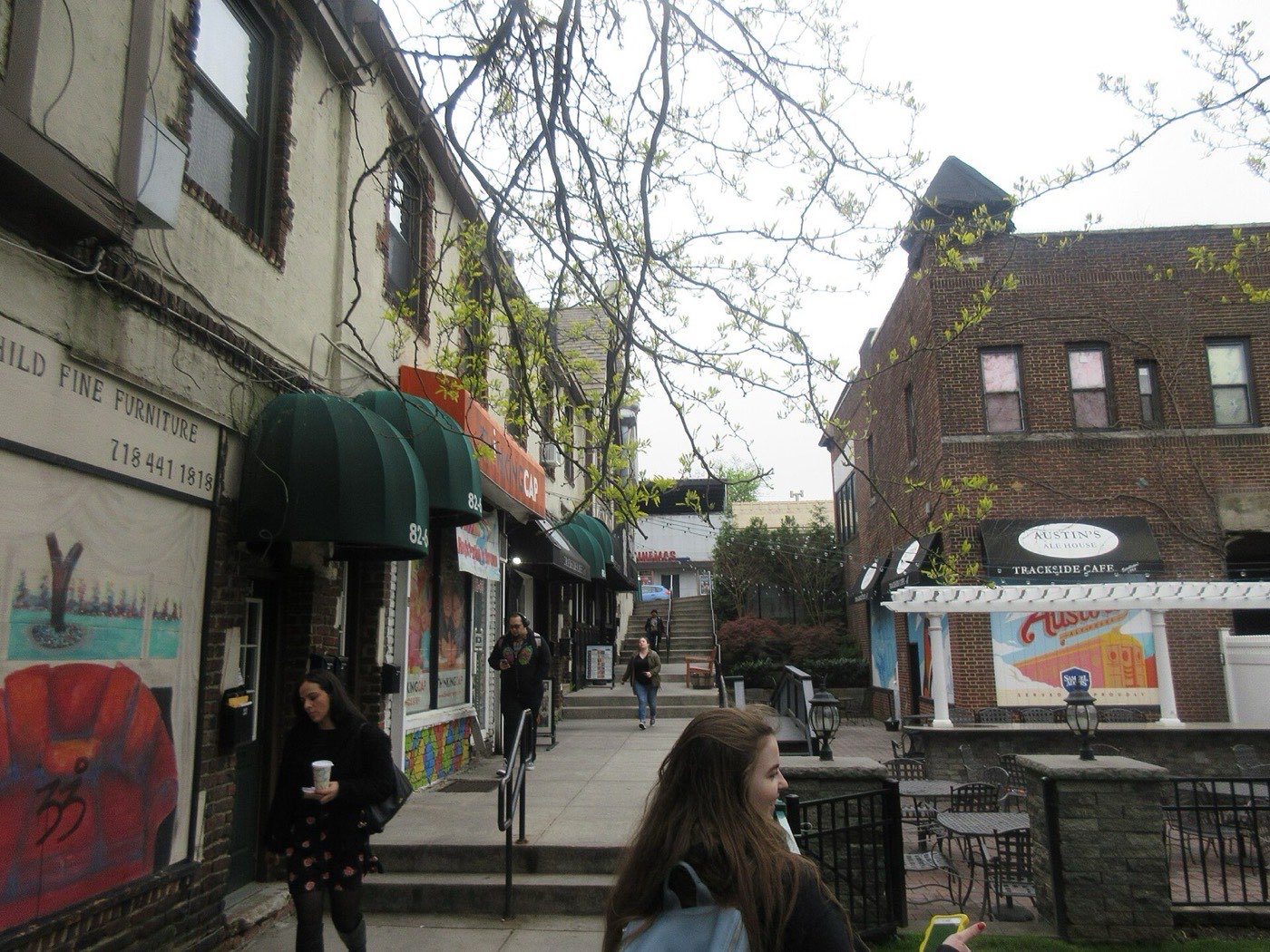
Catherine Genovese, 28, was sexually assaulted and killed in the early hours of March 13, 1964, in the Kew Gardens district of Queens, New York. She lived at 82-70 Austin Street and had parked in the Long Island Rail Road station lot roughly 100 feet from her door. A short item ran in the Long Island Press the same day under the headline "Woman, 28, Knifed to Death," and that was almost the end of it.
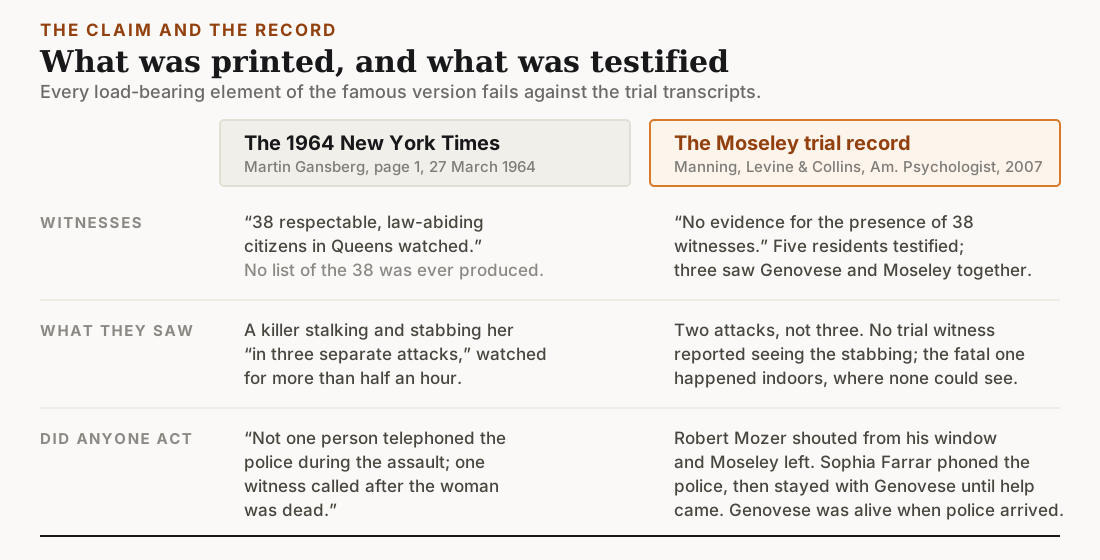
Two weeks later, on March 27, the New York Times put Martin Gansberg's account on page 1 under the headline "37 Who Saw Murder Didn't Call the Police. Apathy at Stabbing of Queens Woman Shocks Inspector." The opening paragraphs, in the widely reproduced version hosted by Southeastern Louisiana University, read: "For more than half an hour 38 respectable, law-abiding citizens in Queens watched a killer stalk and stab a woman in three separate attacks in Kew Gardens. Twice their chatter and the sudden glow of their bedroom lights interrupted him and frightened him off. Each time he returned, sought her out, and stabbed her again. Not one person telephoned the police during the assault; one witness called after the woman was dead."
Even that opening circulates in more than one wording. The 2007 American Psychologist paper discussed below quotes it with "thirty-eight" spelled out and "the sound of their voices" where the reproduction has "their chatter." Wikipedia notes that the piece has been reprinted since 1964 under a corrected headline, "Thirty-Eight Who Saw Murder Didn't Call the Police." The Southeastern reproduction carries exactly that headline and no correction notice. Which wording matched the print original is not something any of these sources settles.
The headline says 37 and the first sentence says 38. Wikipedia's account of the discrepancy is that "an error reduced the number of witnesses by one in the headline." Either way, the number that ended up in psychology curricula came from that opening sentence, and no list of the 38 has ever been produced. A. M. Rosenthal, the Times metropolitan editor who shaped the coverage, expanded it into a short book, Thirty-Eight Witnesses, later the same year.
What the Kitty Genovese trial record actually contains
In September 2007, Rachel Manning, Mark Levine, and Alan Collins published "The Kitty Genovese Murder and the Social Psychology of Helping: The Parable of the 38 Witnesses" in American Psychologist. They worked from transcripts of Winston Moseley's trial, other legal documents, and research by Joseph De May Jr., a local lawyer and historian who had spent years reconstructing the sightlines on Austin Street. Their finding was that there is "no evidence for the presence of 38 witnesses, or that witnesses observed the murder, or that witnesses remained inactive."
Five residents of the apartments overlooking Austin Street were called at trial: Robert Mozer, Andre Picq, Irene Frost, Samuel Koshkin, and Sophia Farrar, whose first name the paper spells Sophie. Three of them saw Genovese and Moseley together. What they described is not what the textbooks describe. Frost testified that she looked out and saw the two "standing close together, not fighting or anything," and went back to bed. Mozer said he "looked out of the window and looked across the street and . . . saw this girl at the book store, kneeling down, and this fellow was over her in a kneeling position." No witness at trial reported seeing the stabbing.
Mozer also shouted from his window, which Picq corroborated, and Moseley left. Genovese got up and walked slowly around the corner of the building, trying to reach her own entrance at the rear, and in doing so passed out of view of everyone in the buildings across the street. The second and fatal attack took place indoors, in a rear vestibule and hallway that the 2007 paper describes as a spot "where none of the trial witnesses could see," and only one known witness, who was never called at trial, had any line of sight into it. Most of what the 1964 article described as a crowd watching a show is explained by the layout of those buildings.
Charles Skoller, the assistant district attorney on the case, has been quoted on both sides of it. He said "we only found about half a dozen that saw what was going on, that we could use," and separately that "I believe that many people heard the screams. . . . It could have been more than 38." Hearing screams at 3 a.m. near a bar with a local reputation for fights is a different act from watching a murder for half an hour, and the 1964 article collapsed the two. Skoller also reported that one Austin Street resident, Sophia Farrar, was telephoned about the incident and "immediately phoned the police then rushed to Kitty's side." Farrar held Genovese until the ambulance came. She died on August 28, 2020, at 92, and the Times ran her obituary under the headline "Sophia Farrar Dies at 92; Belied Indifference to Kitty Genovese Attack."
Why the wrong version lasted forty-three years in textbooks
The textbook survey in the 2007 paper has the longer reach. Manning and colleagues pulled ten of the most widely used undergraduate social psychology texts. The Genovese story appears in all ten. Seven give it its own text box, subsection, or picture. Almost all state that the witnesses watched from their windows as the murder unfolded, and all state that nobody intervened or called the police until she was dead.
Their sample quotation comes from Eliot Aronson's The Social Animal, a book they took some care to describe as good rather than bad: "no fewer than 38 of her neighbors came to their windows at 3:00 AM in response to her screams of terror—and remained at their windows in fascination for the 30 minutes it took her assailant to complete his grisly deed." Every load-bearing element of that sentence traces back to Gansberg's lede. For forty-three years, professional psychologists reproduced a newspaper paragraph as a finding.
The authors describe a plain mechanism. Textbook writers work from secondary sources, and once a version is established it gets echoed forward, the same pattern Ben Harris documented in 1979 for the Little Albert experiment. Franz Samelson's account of origin myths in psychology, which the paper quotes, describes them as arriving "as a byproduct of pedagogy: as a means to elucidate the concepts of scientific specialty, to establish a tradition, and to attract students."
Manning, Levine, and Collins go further and argue the story functions as a modern parable, the inverse of the good Samaritan. The Samaritan story honors one person who helps while others pass by. The 38 witnesses story warns that the presence of others can dissolve an individual's will to act, which is the moral shape that made diffusion of responsibility such an intuitive explanation. A claim assembled that neatly gets checked less often, and the neatness itself is a reasonable prompt to ask who put it together and what got left out.
When the New York Times corrected its own front page
Winston Moseley died in prison on March 28, 2016, at 81, after 52 years inside. The Times used his obituary, published in April 2016, to settle accounts with its own reporting, writing that the 1964 article "grossly exaggerated the number of witnesses and what they had perceived." It added: "None saw the attack in its entirety. Only a few had glimpsed parts of it, or recognized the cries for help," that many "thought they had heard lovers or drunks quarreling," and that "there were two attacks, not three. And afterward, two people did call the police."
That is an accurate, unhedged retraction of a front-page story. It ran inside the obituary of the man who committed the murder, half a century after publication, long after the claim had been absorbed into the general knowledge of several professions. No correction catches up with a story that has had 52 years of head start.
How the correction is decaying in public
The debunking has been circulating for about twenty years, long enough to get compressed and garbled the way the original was. Public technology forums are a serviceable place to watch this, because comments carry timestamps and threads stay readable. A search of the Hacker News comment archive returns roughly sixty comments mentioning the case going back to 2010, and a large share of them push back on the 38 witnesses version rather than repeat it. Several of those corrections introduce new errors.
In December 2023, a commenter pushed back on a blog post that described Genovese being murdered "outside of her Brooklyn apartment while thirty seven bystanders watched." The correction about the bystanders was sound. The borough in the post it was correcting was wrong, since Kew Gardens is in Queens, and nobody in the thread mentioned it.
In October 2025, another commenter summarized the case as: "The truth was many people called the police, but nobody came. It was an essentially a coverup." That version replaces one overstatement with another. The evidence for calls is retrospective and thin, and the 2007 paper is explicit that this collection of later accounts "does not necessarily provide adequate grounds on which to accept or reject claims regarding the lack of intervention." Police did arrive, and Genovese was still alive when they did. A February 2025 comment went further and called the story "a NYT excuse for the NYPD failing to save Kitty Genovese." That overstates something real rather than inventing it. The Times only pursued the story because police commissioner Michael J. Murphy raised it with Rosenthal over lunch, telling him, in Rosenthal's later account, "That Queens story is one for the books." A police-deflection reading of that origin is arguable; a settled motive it is not.
A 2023 comment got closest: "two of Kitty Genovese's neighbors helped her, one even confronting her attacker. there were also several calls to the police." Even here, "confronting" is stronger than the record, which has Mozer shouting from a window. Across all four, the compression that produced the myth is doing the same work on the correction, and the qualifiers go first in both directions.
What the Kitty Genovese case still supports about bystanders
None of this touches the bystander effect as a laboratory finding, and the 2007 authors say so directly: "We are not, therefore, claiming that challenges to the story of the 38 witnesses invalidate the tradition of work on bystander intervention." John Darley and Bibb Latané's experiments were prompted by the newspaper story but did not depend on it, and the effect has been reproduced for decades.
What has changed is that there is now field evidence where there used to be an anecdote. In American Psychologist, in a paper released online in June 2019, Richard Philpot, Lasse Suonperä Liebst, Mark Levine, Wim Bernasco, and Marie Rosenkrantz Lindegaard coded 219 CCTV recordings of real public conflicts in Amsterdam, Lancaster, and Cape Town. At least one bystander intervened in roughly 91% of them, with an average of 3.76 interveners per incident, and a larger number of bystanders present was associated with a higher chance of someone helping. Levine co-authored both that paper and the 2007 one, which is a fair summary of where the twelve years in between went.
So the sentence people carry about Kitty Genovese is wrong twice over. It misdescribes what happened on Austin Street, and it points the wrong way about what strangers generally do when they witness a public conflict.
What the case is useful for now
A number with no document behind it can outlive everyone who could have produced the document. Nobody ever published a list of 38 people, and asking where a specific figure came from would have worked here on day one, for a psychology undergraduate as easily as for a reporter.
The case of D.B. Cooper's name is a smaller-scale version of the same failure: a detail nobody traced back to its source, in that instance a reporter's guess on a bad phone line, hardened into settled fact simply because it was repeated first and challenged decades late.
A claim shaped like a lesson also gets checked less than a claim shaped like a fact. The 38 witnesses story arrived with its moral already attached, which made it repeatable and inspectable in inverse proportion. That property is what makes a post built for reaction travel too, and it reads the same way whether the subject is a social feed or a fifty-year-old crime.
The last piece is that corrections decay. The Times published a clean retraction in 2016, and by 2023 the corrected version was already mutating into new inaccuracies in public. Getting the correction right is not a state anyone arrives at and holds, which is part of why the case for this skill is stronger now than it was ten years ago. Roko's basilisk shows the same gap from a different angle: the argument was shown to be flawed almost immediately, and the correction has done essentially nothing to slow how often the claim still gets repeated, because a correction and a good story aren't competing for the same audience.