
The short version
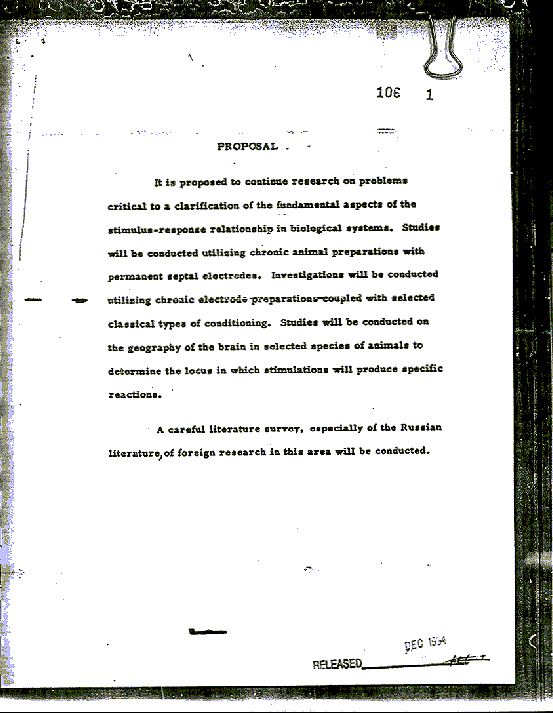
MKUltra was real. It was not a rumor, not a conspiracy theory that later turned out to be false. It was a CIA program that ran from the early 1950s into the 1960s, tested drugs and behavior-modification techniques on people, and got investigated by Congress after journalists forced it into the open in the mid-1970s.
What's less understood is how uneven the record is. Some of it is nailed down by the CIA's sworn testimony, with exact numbers. Some of it, including the single most-repeated MKUltra story on the internet, is something even the people closest to it say cannot be confirmed. And some of what circulates today isn't from the historical record at all. It's the label "MKUltra" being reached for because it explains things that feel too strange or too coordinated to be ordinary.
What the CIA's 1977 testimony documented
Most retellings of MKUltra lean on secondary sources. The primary one is a joint hearing held on August 3, 1977, before the Senate Select Committee on Intelligence and the Subcommittee on Health and Scientific Research, where CIA Director Adm. Stansfield Turner testified directly, under oath, about what newly recovered documents showed.
Turner told the committee the recovered material covered 149 MKULTRA subprojects connected to behavioral modification, drug testing, or covert drug administration, plus 33 further subprojects on unrelated intelligence work. The documents named 185 non-government researchers and assistants and 80 participating institutions, including 44 colleges or universities, 15 research foundations or pharmaceutical companies, 12 hospitals or clinics, and 3 penal institutions (Turner's subtotals add to 74, not 80; the hearing record does not explain the gap).
On the question that matters most, how many people were experimented on without knowing it, Turner was careful not to overstate what the CIA could actually prove. When Senator Schweiker pressed him on where contact with unwitting subjects took place, Turner answered: "We are trying to be very precise with you, sir, and not draw an inference here. There are 6 cases of these 149 where we have enough evidence in this new documentation to substantiate that there was unwitting testing and some of that involves these safe houses." The rest, in his account, were either ambiguous or clearly voluntary. That is a documented number, straight from the CIA's director. It is also considerably narrower than what "the CIA secretly drugged unwitting Americans" usually implies when it circulates without a number attached.
Why the records almost disappeared, and why a few didn't
For two years after the Church Committee's 1975 investigation, the working assumption, inside the CIA and out, was that the paper trail was gone. Turner's statement to the committee said as much: "Until the recent discovery, it was believed that all of the MKULTRA files dealing with behavioral modification had been destroyed in 1973 on the orders of the then retiring Chief of the Office of Technical Service."
What survived did so by accident. An employee processing a Freedom of Information Act request went looking through CIA holdings and found seven boxes that had been sent to the agency's Retired Records Center back in 1970, three years before the destruction order. They'd been filed by the Budget and Fiscal Section as financial paperwork, not under the MKULTRA project file where records were normally kept, which is exactly why the 1975 Church Committee search missed them: investigators had checked both the active and retired records of all branches of CIA considered at all likely to have had association with MKULTRA documents, but nobody thought to check the financial branch's retired holdings. A filing quirk, not a leak or a whistleblower, is the reason any of this detail exists today.
There's a smaller mix-up in the dates, too. Turner's statement described MKULTRA itself as running from 1953 to 1964, not the 1953-to-1973 span you'll see in most casual summaries. The 1973 date is when the destruction order was given, and a successor project, MKSEARCH, continued similar work for some years after 1964. Both things are true. They're just not the same fact, and conflating them is how a specific, testified-to timeframe turns into a vaguer, longer-sounding one.
The program's public unraveling had already started two years before that FOIA discovery, over the death of a single scientist. Frank Olson, a biochemist at the Army's Fort Detrick, fell to his death from a New York hotel window on November 28, 1953, nine days after CIA personnel had given him LSD without his knowledge at a work retreat. His death was ruled a suicide at the time. It stayed a private tragedy for 22 years, until a 1975 government report on CIA activities referenced an unnamed drug-related death and reporting connected it to Olson. The Ford administration publicly apologized to his family that year; Congress passed a $750,000 settlement for the family the following year, on October 12, 1976. Olson's sons have continued to dispute the suicide finding for decades, but that's a separate, unresolved question from what's established: he was dosed without consent, and that fact is what first pulled MKULTRA into public view.
The 2026 fight over what CIA still hasn't released
The record didn't stay closed after 1977. On June 30, 2026, the House Oversight Committee's Task Force on the Declassification of Federal Secrets, chaired by Rep. Anna Paulina Luna (R-Fla.), held a hearing titled "Mind Control and Accountability: Uncovering the Truth of the CIA's MKULTRA Experiments." In her opening statement, Luna cited a CIA document showing that Director Richard Helms, in January 1973, personally ordered the destruction of the MKULTRA files as he prepared to leave office, over the written objection of the agency's own records center, and that four people spent a day tearing up and burning 152 files [House Committee on Oversight and Government Reform, "Luna Opens Hearing on MKULTRA Project Transparency," June 30, 2026]. Neither Helms nor Sidney Gottlieb, the chemist who ran the program's day-to-day work, was ever charged over the destruction.
That same task force pulled in a second, separate controversy a few weeks earlier. On May 13, 2026, CIA officer James Erdman testified under a Senate subpoena before the Homeland Security and Governmental Affairs Committee, alleging the agency had seized roughly 40 boxes of JFK-assassination and MKULTRA records from the Office of the Director of National Intelligence, while those very files were undergoing review for declassification. Congress gave the CIA a 24-hour deadline to return them [U.S. Senate Committee on Homeland Security and Governmental Affairs, testimony letter, May 2026; The Hill, "What is MK-Ultra and why is it making headlines," May 14, 2026].
Neither story rewrites what Turner already put on the record in 1977. What they add is a live demonstration of the same pattern the rest of this page is about: a program with a documented core, surrounded by a records fight that keeps producing new claims faster than any of them can be checked. A hearing title or a subpoenaed witness is worth exactly as much as the primary document behind it, which is the same standard this page applies to the 1977 testimony itself.
The Unabomber connection everyone repeats as settled
The most-repeated specific MKUltra story on the internet is not about Frank Olson. It's about Ted Kaczynski. From the fall of 1959 through the spring of 1962, Kaczynski was one of 22 Harvard undergraduates who went through a study called "Multiform Assessments of Personality Development Among Gifted College Men," run by psychologist Henry Murray, who had developed interrogation methods for the wartime Office of Strategic Services, the CIA's forerunner. Journalist Alston Chase reconstructed the study in detail in "Harvard and the Making of the Unabomber," published in The Atlantic in June 2000: participants were deceived about the study's real purpose, then subjected to deliberately hostile, high-stress interrogation sessions designed to attack their beliefs and self-image, while wired to monitoring equipment.
That much is documented. What isn't is the part almost everyone adds on top: that this was an MKUltra experiment. The person who has spent the most time trying to answer that question is Kaczynski's own brother, David, who wrote a two-part essay on it in December 2010. His conclusion, after laying out what's actually known: "Were the so-called 'Murray experiments' part of MK Ultra? It may be that no one living knows the answer to this question." Later in the same essay, he's more direct about where he lands: "So, while it is not implausible that my brother may have been harmed in a mind-control project funded by the CIA, I think there is insufficient evidence to say that he was."
That's a careful, hedged conclusion from someone with every reason to want a definite answer, and he wrote it knowing that MKULTRA's records were substantially destroyed. It has not stopped television specials and social media posts from stating the Murray-MKUltra link as settled fact. The gap between what David Kaczynski was willing to say in 2010 and what gets repeated about his brother's case now is the clearest single example of how this topic's uncertainty gets flattened into certainty on the way to becoming a meme.
Why "MKUltra" is still the internet's default explanation
On July 13, 2024, a gunman opened fire at a Trump campaign rally in Butler, Pennsylvania. Within hours, accounts on X were circulating a claim that the shooter, 20-year-old Thomas Matthew Crooks, had been trained or programmed through a revived MKUltra program. The CIA does not typically respond to conspiracy claims about itself. This time it did. A CIA spokesperson told Gizmodo: "These claims are utterly false, absurd, and damaging. The CIA had no relationship whatsoever with Thomas Crooks." The agency also pointed out that MKUltra had been shut down more than 40 years earlier and that its declassified record was already public.
The CIA choosing to go on the record against a claim it usually wouldn't dignify is itself a signal of how far that specific claim had traveled. It's also a clean example of the underlying mechanism: MKUltra is real enough, well-documented enough, and secretive enough in its remaining gaps that its name works as an all-purpose explanation slot. Drop it into almost any story that already feels engineered, hidden, or too strange to be random, and it sounds plausible, because the program it's named after really did exist and really was covered up for two decades. The believability of the label comes from the 1977 testimony. The specific claims attached to it usually don't. It's a different mechanism than a shared false memory like the Mandela effect, where nobody set out to deceive anyone, but the outcome rhymes: a real event lends its confidence to a claim the event itself never supported.
How to check a specific MKUltra claim yourself
The move that actually helps is the same one that helps with any specific claim: ask what's being cited, not just what category it falls into. "Declassified CIA documents" is a category. A page number in the August 1977 hearing transcript or a named subproject is a source you can actually check.
It also helps to keep three different confidence levels separate, since MKUltra claims tend to blur them: documented (Turner testified to it, under oath, with a number attached), disputed (Kaczynski's own brother says the evidence isn't there), and unsupported (a 2024 shooting had nothing to do with a program that had been shut down since the 1960s). Treating all three the same way, as "part of MKUltra," is how a real, unusually well-documented scandal ends up doing the work of an unfalsifiable one.
Kitty Genovese's case is the sharper version of the same warning: even the corrected, more accurate version of a famous story can pick up its own distortions once enough people have retold it. Checking the citation is a habit worth building before you repeat either kind of story, which is close to the first thing worth asking about any claim you're about to pass along.
A declassified CIA operations essay on running double agents is worth reading alongside Turner's testimony for the same reason: both are primary documents that turn out to be narrower, more hedged, and more specific than the version of the agency's work that ends up circulating.