
The short version
A double agent is someone already working for one intelligence service who gets turned, secretly, to serve a second one, while still appearing loyal to the first. That's not the same as a mole, who gets planted inside the target organization from the very start, and it's not the same as a defector, who switches sides openly and stops functioning as anyone's secret agent at all.
The hard part isn't the definition. It's that the services who actually run double agents for a living say the odds of getting a genuine convert, rather than someone who's just complying under pressure, are worse than the movie version suggests. Two documented cases from the same war show what that gap looks like in practice: one where a double agent's new loyalty held up under enormous pressure and helped decide the outcome of D-Day, and one where the information handed over was completely real and it still didn't matter, because the person deciding whether to believe it had already made up his mind about the man delivering it.
What actually makes someone a double agent
The most precise definition available isn't from a dictionary. It comes from the CIA's own Center for the Study of Intelligence, in a 1962 essay called "Observations on the Double Agent," written by an officer under the pseudonym F.M. Begoum and declassified in 1994. Begoum defines a double agent as "a person who engages in clandestine activity for two intelligence or security services... who provides information about one or about each to the other, and who wittingly withholds significant information from one on the instructions of the other or is unwittingly manipulated by one so that significant facts are withheld from the adversary."
That's narrower than it sounds. Begoum is explicit that "peddlers, fabricators, and others who work for themselves rather than a service are not double agents because they are not agents." Someone selling invented secrets to whoever will pay doesn't qualify. He's equally explicit about the difference from a mole, which the essay calls a "penetration": a double agent has an actual agent relationship with both services, while a penetration is placed inside the target organization in a staff or officer capacity from the start, never having worked for the side it's betraying. A defector is a third, separate category again: someone who switches sides openly and stops functioning as anyone's secret agent, rather than continuing to work both channels at once.
One layer up from that: a "re-doubled" agent is someone whose double-dealing gets caught by their original side and who is persuaded to reverse allegiance again, a term Wikipedia's own entry on double agents quotes directly from Begoum's essay. What's commonly, if a bit loosely, called a triple agent is different again: someone who only pretends to have been turned, while secretly staying loyal to their original service the entire time.
How almost none of them start as a real change of heart
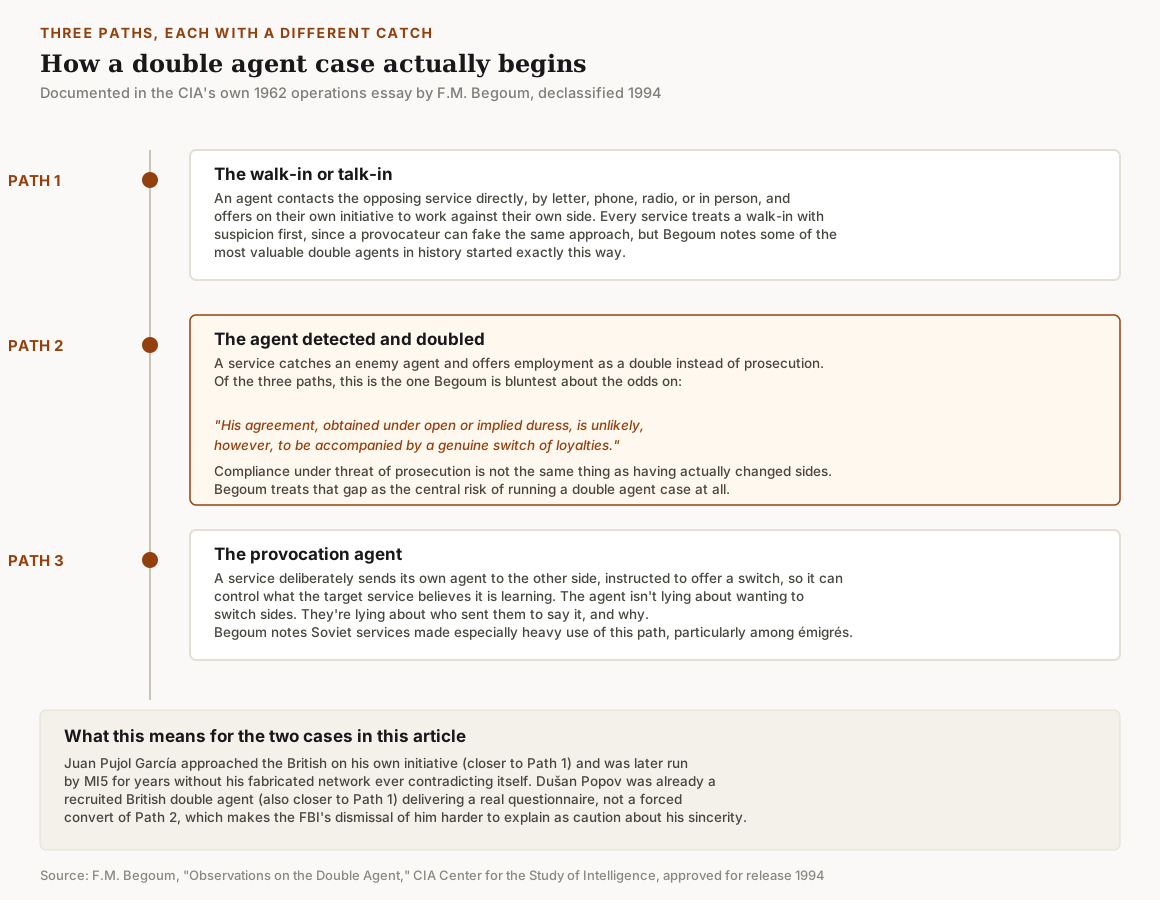
Begoum's essay lists three ways a double agent case typically begins, and only one of them involves someone approaching the other side on their own initiative. The "walk-in or talk-in" is exactly that: an agent contacts the opposing service directly, by letter, phone, radio, or in person, and offers to work against their own side. Begoum notes some of history's most valuable double agents started this way, though every service treats a walk-in with suspicion first, since a provocateur can fake the same approach.
The second path is "the agent detected and doubled": a service catches an enemy agent and offers employment as a double instead of prosecution. It's the path where Begoum is bluntest about the odds of getting a real convert out of it: "His agreement, obtained under open or implied duress, is unlikely, however, to be accompanied by a genuine switch of loyalties." People who agree to keep spying because the alternative is prison, or worse, will comply. Compliance isn't the same thing as having actually changed sides, and Begoum treats that gap as the central operational risk of running a double agent case at all: a service can control what someone says, and still have no way to know whether they mean it.
The third path, the "provocation agent," is the coldest of the three: a service deliberately sends its own agent to the other side, instructed to offer a switch, so it can control what the target service believes it's learning. The agent isn't lying about wanting to switch. They're lying about who sent them to say it, and why.
The case where the switch held: Agent GARBO and D-Day
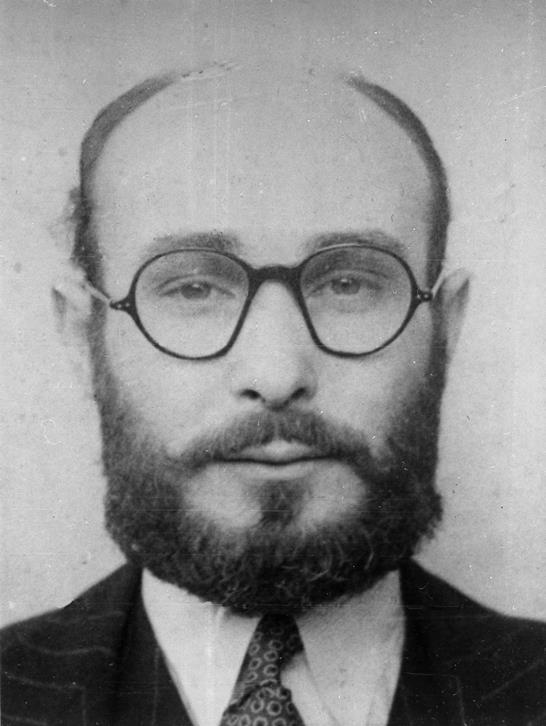
Juan Pujol García is the clearest documented case of a double agent whose loyalty to his new side held under real pressure, and the record of what he actually did is unusually well preserved because Britain's wartime intelligence files and Germany's own captured wartime intelligence summaries both survive.
Pujol first tried to volunteer as a British spy against Germany on his own, in 1941, and was turned down. So he approached the Germans instead, convinced them he was already inside Britain feeding them intelligence, and spent months inventing reports from sub-agents who existed only on paper, while he was actually still in Lisbon working from a tourist guidebook and train timetables. British intelligence eventually noticed the fabricated reports (the Germans, at one point, spent real resources hunting for a convoy Pujol had invented) and brought him in properly in 1942, giving him the codename GARBO and a handler, Tomás Harris. Working from London, Pujol and Harris expanded the fictitious network to a complete roster of named sub-agents, each with a full backstory (Wikipedia's account and several other secondary sources put the final count at 27; MI5's own summary of the case has been quoted elsewhere as saying 28), and kept feeding it to German intelligence for the rest of the war. Germany funded the entire operation: Wikipedia's account of Pujol, citing historian Mark Seaman's 2004 biography, records that the Germans paid Pujol roughly $340,000 over the course of the war, worth around $6.3 million today.
The network's biggest test came three days after the June 6, 1944 Normandy landings. On June 9, Pujol sent a message to German high command, relayed to Adolf Hitler himself, reporting an invented order of battle: 75 Allied divisions supposedly stationed in Britain, when the real number was about 50. The message argued that the Normandy landing was a diversion and that the real invasion, led by an entirely fictitious First US Army Group under General Patton, was still coming at Pas-de-Calais. A postwar review of captured German records found 62 of Pujol's reports had been folded into official OKW intelligence summaries by that point, and German high command believed this one completely: two armored divisions and 19 infantry divisions stayed in the Pas-de-Calais region through July and August 1944, waiting for a second landing that was never coming, while Field Marshal Gerd von Rundstedt refused to let Erwin Rommel move them to Normandy.
Germany never found out. On July 29, 1944, Pujol was awarded the Iron Cross, Second Class, for his services to the German war effort, a decoration normally reserved for combat soldiers and requiring Hitler's personal authorization; he later wrote in his own 1985 memoir that the message informing him began, "With great happiness and satisfaction I am able to advise you today that the Führer has conceded the Iron Cross to you for your extraordinary merits." Not quite four months later, on November 25, 1944 (119 days after the Iron Cross), King George VI made him a Member of the Order of the British Empire, for the opposite reason. Both honors describe exactly the same set of actions.
The case where being real didn't matter: TRICYCLE and Pearl Harbor
Dušan Popov's case shows the other half of the gap between genuine and believed. Unlike Pujol, Popov's information was real and verified by the British service running him, and it still didn't reach the people who could have used it, because the man deciding whether to trust it had decided he didn't like the man delivering it.
Popov, a Serbian lawyer working for British intelligence's Double Cross System under the codename TRICYCLE, was sent to the United States by his German handlers in 1941 to rebuild a spy network there, carrying $80,000 in cash for expenses. His German orders came with an intelligence questionnaire, later published as an appendix to J.C. Masterman's official history of the Double Cross System, and one full page of the three-page document was devoted to unusually specific questions about American defenses at Pearl Harbor, including ship movements and torpedo netting. Popov brought the questionnaire directly to the FBI and explained where it had come from. He later said, in a televised interview, that he'd delivered this warning on August 12, 1941, just under four months before the attack.
J. Edgar Hoover's response wasn't to evaluate the document. It was to be offended by Popov personally. According to historian Hervie Haufler's account in his book The Spies Who Never Were, as reported by military historian Dwight Jon Zimmerman, Hoover opened their eventual meeting by shouting: "You come here from nowhere and within six weeks install yourself in a Park Avenue penthouse, chase film stars, break a serious law [the Mann Act], and try to corrupt my officers. I'm telling you right now I won't stand for it." Popov, by the same account, tried to redirect him: "I brought a serious warning indicating exactly where, when, how and by whom your country is going to be attacked." It didn't change anything; Zimmerman's account states the Pearl Harbor warning was never forwarded to the military. How much weight this one document, arriving nearly four months ahead of the attack and describing intelligence targets rather than a firm date, could actually have carried is something historians still debate. What isn't in dispute is that Hoover's assessment of Popov's information was inseparable from his assessment of Popov's personal life, and the FBI's own well-documented distrust of the messenger is the reason usually given for why the warning went nowhere.
What the CIA's own test actually gives you
Put the two cases next to Begoum's essay and the pattern is specific enough to reuse outside of espionage. Pujol's loyalty held up because British intelligence could check it against independent evidence, in real time, for years, before it ever mattered: the Germans' own belief that his fake network was real, the resources they spent chasing his fabricated leads, the fact that the network kept growing on Germany's money while never once contradicting itself. Popov's information was true regardless of what Hoover thought of him personally, which is exactly Begoum's point about a "genuine switch of loyalties": the switch happens or doesn't happen in the source, and no amount of the evaluator's personal comfort or discomfort with the messenger moves that fact one way or the other.
The version of that test that applies outside intelligence work isn't "trust your gut about whether someone seems sincere." It's closer to what British intelligence actually did with Pujol: check the claim against something that doesn't depend on the person's word, and keep checking, since a single moment of apparent sincerity, or a single moment of personal dislike the way Hoover reacted to Popov, tells you less than a sustained pattern does. It's a different failure of certainty than the kind a courtroom is built to guard against, but the same underlying move: a standard that holds up against the evidence, not a feeling about the person presenting it. Getting the underlying record right the first time matters here too, the same way tracking down what a declassified CIA record actually says beats repeating the version that's easier to believe. And the basic mechanism Pujol ran on Germany for two years, a fabricated identity, sustained convincingly enough for long enough, built to get someone to act on trust instead of verification, is the same one behind an invented persona built to win someone's trust for entirely different reasons, just aimed at a country's high command instead of one person.