
The short version
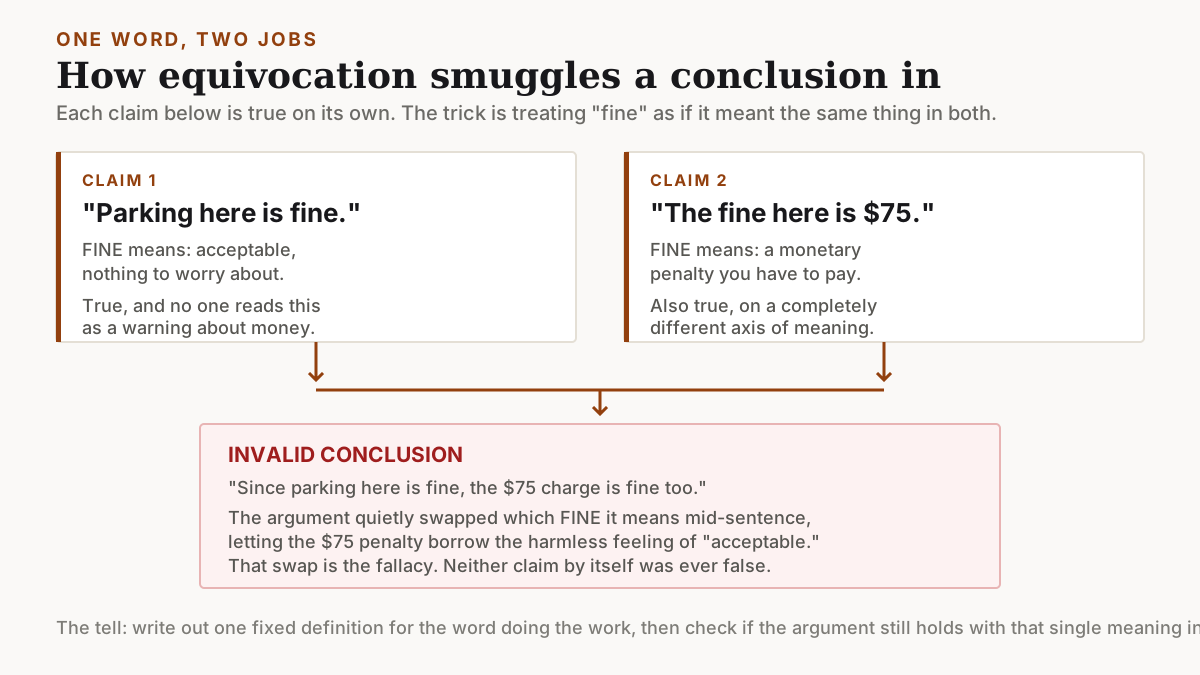
Equivocation is what happens when an argument uses one word to mean two different things and counts on you not noticing the switch. Say "parking here is fine," then say "the fine is $75," and both sentences are true on their own. Treat "fine" as if it meant the same thing in both, and you get an argument that sounds like it proves something when it proves nothing.
That's what makes it slippery. It isn't a lie. Every individual claim inside it can check out. The manipulation lives in the seam between two true statements, where a word gets to keep its first, harmless job while quietly picking up a second, costlier one.
A fallacy old enough to open the first logic textbook
Aristotle catalogued this move around 350 BCE, in a short treatise called Sophistical Refutations. He split deceptive arguments into ones that go wrong because of the words themselves and ones that go wrong for other reasons entirely. Equivocation, which he called by the Greek term for homonymy, headed the first list, alongside five other language-based tricks that include amphiboly, the same problem caused by ambiguous grammar instead of an ambiguous word.
His own example still holds up: "Those learn who know: for it is those who know their letters who learn the letters dictated to them." The trick sits in the Greek verb translated as "learn," which covers both acquiring new knowledge and applying knowledge you already have. Read one way, the sentence is trivially true. Read as a single consistent claim, it sounds like a paradox, because it never was one argument to begin with.
A version taught in introductory logic courses today runs the same play with an English word instead: "A feather is light. Nothing light is dark. So no feather is dark." The first "light" means low in weight. The second means pale in color. Once you swap definitions mid-argument, a claim about a feather's color gets derived from a claim about its weight, which was never a real inference in the first place.
The 1606 case that turned equivocation into a capital charge
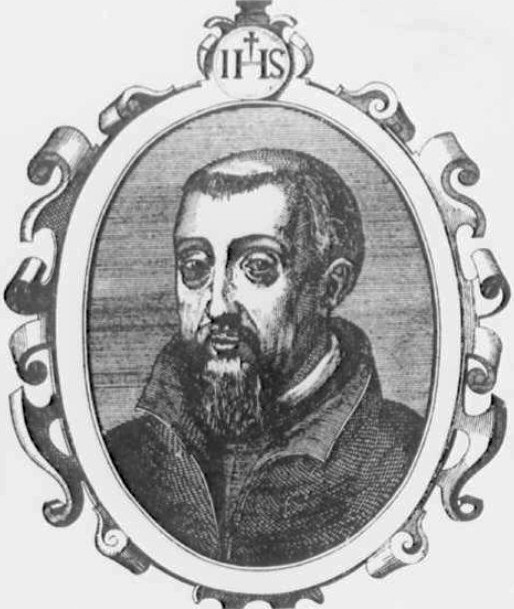
The most consequential real-world use of the word isn't a logic-class example at all. It's a legal doctrine, and it's a related but distinct idea from Aristotle's fallacy: not a slip inside one argument, but a deliberate technique for answering questions under oath without, in the speaker's own accounting, lying. English Jesuits in the late 1500s faced execution simply for practicing their faith. Priest Henry Garnet's 1598 Treatise of Equivocation taught a way through interrogation: answer a hostile question with a statement that was technically true on some reading, while silently reserving the qualification that made it misleading, so the speaker's conscience stayed clear even though the interrogator walked away deceived.
Garnet's own equivocation became the centerpiece of his 1606 trial. He'd learned of the Gunpowder Plot to blow up Parliament through the seal of the confessional, which canon law barred him from disclosing, and he spent months evading direct questions about it after his January 1606 arrest. The prosecutor, Edward Coke, wasn't persuaded by the distinction between misleading and lying: he called Garnet's equivocation "open and broad lying and forswearing." Garnet was convicted on 28 March 1606 and executed on 3 May.
Shakespeare's Macbeth premiered that same summer, and its Porter scene imagines a doorkeeper to Hell greeting an arrival with a line audiences at the time would have caught immediately: "here's an equivocator, that could swear in both the scales against either scale; who committed treason enough for God's sake, yet could not equivocate to heaven." The word had stopped being an abstract term for logicians. For a few months in 1606, it was current events.
The same trick, in a 2024 court opinion
Move from a 1606 scaffold to a 2024 appeals court and the mechanism is identical, just lower stakes. Kimberly-Clark sold baby wipes labeled "plant-based wipes" with nature-themed packaging. Some versions carried an asterisk next to the phrase, pointing to a qualifier printed elsewhere on the front label: "70%+ by weight." Other versions of the same product line carried no asterisk and no qualifier at all.
A shopper suing over the labeling argued that "plant-based" implied fully natural, unmodified ingredients, when the wipes in fact contained synthetic components. In Whiteside v. Kimberly-Clark Corp., decided July 17, 2024, the Ninth Circuit drew exactly the line Aristotle's framework predicts: it upheld dismissal of claims against the asterisked packaging, since a shopper who can see "70%+ by weight" in plain text on the same label isn't being told the product is 100% natural, but it reversed the dismissal of claims against the unasterisked versions, where "plant-based" was left free to mean whatever the stronger, more marketable sense implied.
The same pattern shows up elsewhere in false-advertising law. A separate Ninth Circuit case, McGinity v. Procter & Gamble, turned on a "nature fusion" shampoo label the court found ambiguous enough that a back-label ingredient list was fair game for resolving what the front label actually claimed. None of these labels stated a falsehood outright. Each one let a technically defensible sense of a word do the work a stronger, unearned sense would have had to justify on its own.
Advertising law draws a related but separate line for hyperbole: a claim vague and unquantifiable enough that no reasonable person would treat it as fact, "better ingredients," "world's best coffee," gets protected as puffery rather than punished as deceptive. The "plant-based" fight above wasn't about vagueness protecting the phrase. It was about which of two available meanings the label actually invoked, which is exactly the seam equivocation lives in.
Why it works on you
Linguist H.P. Grice named the underlying assumption in his 1975 paper "Logic and Conversation." He argued that ordinary conversation runs on an unspoken Cooperative Principle, a set of expectations both sides silently hold each other to. One of his maxims of Manner is explicit: "avoid ambiguity." Listeners default to assuming a speaker is following that maxim, which means they default to assuming a word keeps one stable meaning across a conversation unless told otherwise.
Equivocation spends that trust. You're not checking whether "fine" changed meaning between two sentences, because checking that isn't how conversation normally works, and an arguer relying on the fallacy is counting on exactly that. The same default that lets ordinary conversation move quickly is the default an equivocal argument quietly exploits.
The actual test for catching it
Don't scan for outright false statements. In equivocation, there usually aren't any. Instead, find the single word or phrase doing the most load-bearing work in the argument, write out one fixed definition for it, and re-run the whole argument holding that one definition constant everywhere it appears. If the conclusion collapses once the meaning has to stay put, the argument was never really about the world. It was about a word switching costumes partway through.
That's the same move that separates the two asterisked and unasterisked baby-wipe labels above: hold "plant-based" to one fixed meaning, and either the label supports it or it doesn't. It's also close kin to how loaded language works, where a word's connotation does an argument's job instead of its evidence, and to ad hominem, where attacking the arguer substitutes for engaging the argument. All three let something other than a valid inference carry the weight. Equivocation just hides its swap in plain sight: the word never changes spelling, only its job.